
Ultimate Guide to RV Storage in Texas: Keep Your Rig Safe Year-Round
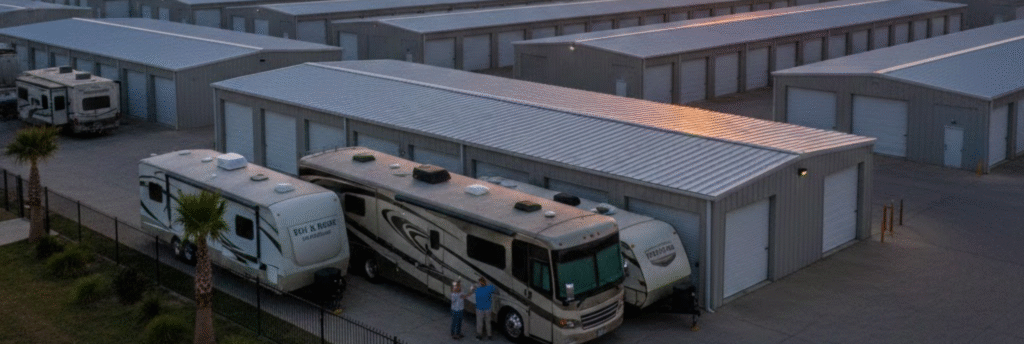
Storing your RV properly isn’t just a convenience—it’s a critical step in protecting a major investment, especially under the relentless Texas sun and its unpredictable weather. From the humid Gulf Coast to the arid plains, finding the right RV storage in Texas requires a strategy tailored to the local climate. This ultimate guide explores every option, provides realistic cost expectations for the Lone Star State, and delivers a step-by-step checklist to prepare your rig for storage, ensuring it’s always ready for your next adventure from your home base at Inez Spring Riverfront RV Park.
Why Proper RV Storage in Texas is Non-Negotiable
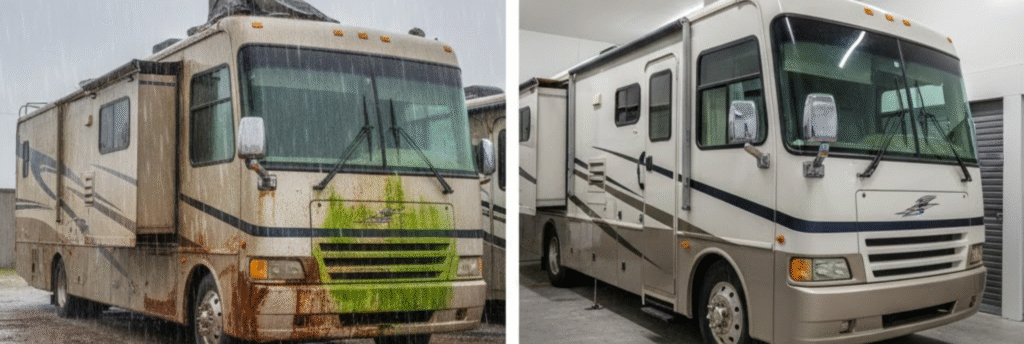
Parking your RV in the driveway might seem easy, but Texas weather can silently cause thousands of dollars in damage. The intense UV rays, summer heat, sudden hailstorms, and high humidity create a perfect storm for problems. Proper storage is essential for:
Preventing Weather Damage
The Texas sun can fade paint, crack seals, and degrade rubber roof membranes in a single season. As noted in storage guides, prolonged UV exposure is a primary cause of exterior damage. Furthermore, hail—common in North and Central Texas—can dent roofs and siding, leading to costly repairs.
Protecting Interiors and Systems
Inside a sealed RV under the Texas sun, temperatures can soar, cracking upholstery, warping wood, and creating a breeding ground for mold. Batteries drain faster in heat, and appliances can be stressed by extreme temperature swings.
Maintaining Resale Value
An RV stored correctly ages gracefully. Protecting it from cosmetic and mechanical decay preserves its market value, a crucial consideration whether you plan to sell or enjoy it for years.
Types of RV Storage Options: Which is Right for Your Rig & Budget?
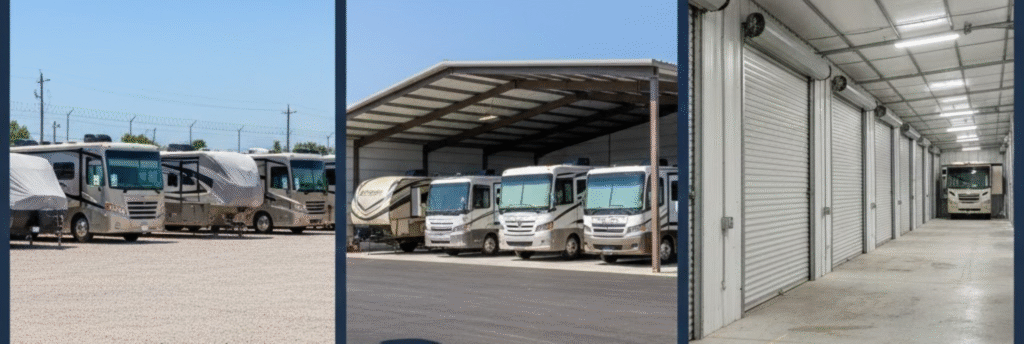
Texas offers a spectrum of storage solutions. Your choice depends on your budget, RV value, and local climate risks.
Outdoor Storage (Uncovered)
The most affordable option, essentially a parking spot in a fenced lot.
Pros: Low cost (often $40-$100/month), ample availability.
Cons: Maximum exposure to sun, rain, dust, and hail. Requires diligent use of a quality, breathable RV cover for basic protection.
Covered Outdoor Storage
A roofed, carport-style structure without walls.
Pros: Excellent defense against direct sun, UV rays, and hail at a moderate price point ($50-$150/month). Offers good ventilation.
Cons: Sides are open to wind-blown rain, dust, and pests. Often considered the best value-for-protection balance for many Texas RV owners.
Indoor Storage (Enclosed)
Your RV is parked inside a private unit or shared warehouse.
Pros: Complete protection from all weather, enhanced security, and often better dust control. Ideal for long-term storage or high-value rigs.
Cons: Higher cost ($100-$300+/month), less frequent availability, especially for large Class A motorhomes.
At-Home Storage
Keeping your RV on your own property.
Pros: Ultimate convenience, no monthly fee.
Cons: You are responsible for all protection. Many Texas municipalities and HOAs have restrictions. Investing in a durable metal RV carport can be a cost-effective long-term solution if you have the space.
The Verdict for Texas: For most owners, covered outdoor storage strikes the ideal balance, shielding your RV from the state’s most damaging element—the sun—without the premium of indoor storage. However, if you’re in a hail-prone region or storing a luxury coach, indoor is worth the investment.
How Much Does RV Storage Really Cost in Texas?
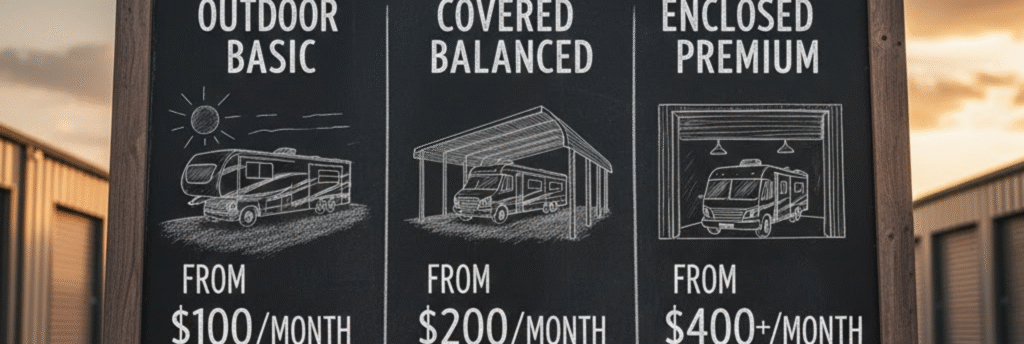
Costs vary widely by location, type, and RV size. Here’s a realistic breakdown for Texas:
Statewide Averages
You can expect to pay between $100 and $300 per month. Basic outdoor spots in rural areas can start as low as $40, while premium indoor storage for a large motorhome in metros like Dallas or Houston can approach $300.
Urban vs. Rural
Demand and land costs drive prices. Facilities in the DFW metroplex, Austin, or Houston typically charge 20-50% more than those in smaller towns like Eastland. Sometimes, storing your rig just outside the city limits can yield significant savings.
Cost-Saving Tips
Commit Long-Term: Many facilities offer a discount (5-15%) for prepaying 6 or 12 months.
Ask About Discounts: Military, senior, or first responder discounts are common.
Consider Peer-to-Peer Apps: Platforms like Neighbor can connect you with cheaper, private land storage.
Bundle with Amenities: Some RV parks, including ours, offer storage to guests. If you’re a frequent visitor or work camper, this can be a convenient and potentially discounted option.
The Texas-Tough RV Storage Preparation Checklist
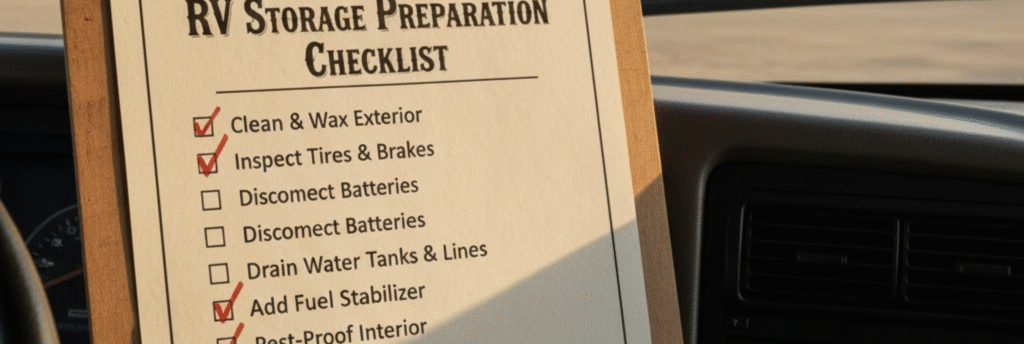
Before you lock up your rig, this tailored preparation is crucial to battle the Texas elements.
Exterior & Mechanical Fortification
Deep Clean & Inspect: Wash and wax the exterior to create a UV-protective barrier. Inspect all roof and window seals for cracks—reseal any issues to prevent monsoon rain leaks.
Tire Care: Inflate to max PSI to prevent flat-spotting. Use heavy-duty UV-resistant tire covers. The sun is the #1 enemy of tire sidewalls in Texas.
Battery Protocol: Disconnect and remove batteries if possible. Store them in a cool, dry place on a maintainer. Heat rapidly accelerates battery discharge.
Interior Climate & Pest Defense
Manage Heat & Moisture: Install vent covers and crack open one or two roof vents to allow hot air to escape. Place moisture-absorbing products like DampRid inside to combat humidity, especially in Gulf Coast regions.
Pest-Proof Thoroughly: Remove ALL food and scented items. Seal potential entry points with steel wool or foam. Consider natural deterrents like peppermint oil pouches in cabinets and storage bays.
Appliance & System Prep: Defrost and dry the refrigerator/freezer, propping the door open with a towel to prevent mold. Drain all water tanks and lines. While a full winterization with antifreeze may not be needed in most of Texas, draining is mandatory to prevent stale water and scale buildup.
Security & Peace of Mind
Remove Valuables: Don’t leave electronics, tools, or personal items inside.
Double-Check Locks: Ensure all compartment doors and hatches are secure.
Verify Insurance: Ensure your policy is active and covers comprehensive damage while in storage.
Frequently Asked Questions
Is covered storage enough for Texas, or do I need indoor?
For most RV owners, a quality covered spot is sufficient. It provides critical protection from UV and hail. Indoor storage is recommended for long-term storage (6+ months), high-value coaches, or if you are in an area with frequent severe storms.
Do I need to winterize my RV for Texas storage?
It depends. In South Texas, draining all water systems is often enough. In North Texas and the Panhandle, where hard freezes can occur, a proper winterization with RV antifreeze is cheap insurance. Given Texas’ unpredictable winters (remember 2021!), when in doubt, winterize.
How do I protect my RV's interior from the extreme heat?
Ventilation is key. Use vent covers, crack a roof vent, and deploy reflective sun shades in all windows. Remove any heat-sensitive items (candles, aerosols, electronics). Consider placing a solar-powered vent fan to create airflow if you won’t have access to power.
Can I store my RV at an RV park?
Yes. Many parks, including Inez Spring, offer storage options. This can be incredibly convenient if you frequent the park. It often means your rig is in a community-minded environment, sometimes with additional security. Always ask about rates and terms.
What amenities should I look for in a storage facility?
Prioritize security: gated access, good lighting, and cameras. Convenience amenities like 24/7 access, on-site dump stations, or electrical outlets (for battery maintainers) are valuable bonuses. Some facilities even offer wash bays or minor maintenance services.
Your RV's Texas Home Base Awaits
Protecting your RV with the right storage solution lets you explore Texas with peace of mind. Whether you’re a full-time RVer exploring diverse jobs or a weekend warrior, a well-stored rig is a reliable rig.
At Inez Spring, we understand the needs of Texas RVers. Beyond potential storage solutions, we offer a perfect riverfront retreat to enjoy before or after storage season. Relax by our spring-fed pool, fish or launch a kayak from our banks, and explore the beauty of Eastland County.
Ready to secure your RV and plan your next Texas adventure?