Work Camping Jobs in Texas: Opportunities at Inez Spring Riverfront RV Park
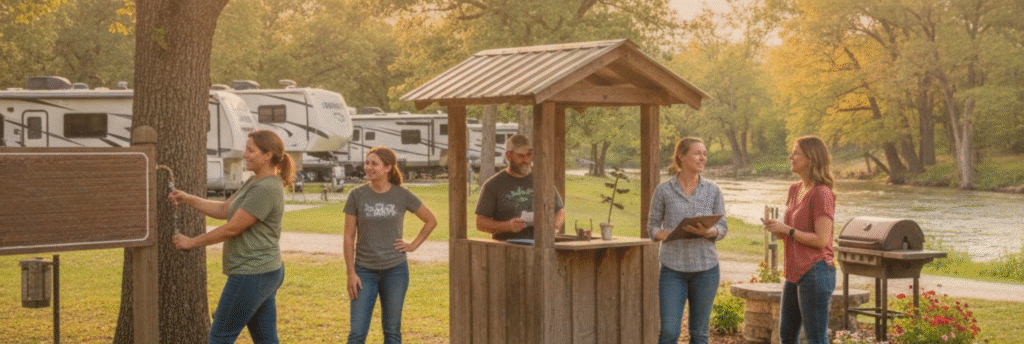
Welcome to your comprehensive guide on work camping jobs in Texas! If you’re an RVer seeking seasonal work or a campground owner looking for cost-saving staffing solutions, this pillar post has you covered. We’ll explore what work camping (or “workamping”) is, how it benefits both work campers and RV parks, and why Inez Spring Riverfront RV Park in Eastland, Texas is positioning itself as a premier destination for seasonal and year-round work camping roles. You’ll learn about common job duties (from maintenance to guest services), hiring seasons, compensation models, and tips for landing these roles.
What is Work Camping?

Work camping, also known as workamping, is the practice of RV travelers working seasonal or temporary jobs at campgrounds, RV parks, and other hospitality or outdoor facilities in exchange for benefits like a free campsite, hookups, and/or wages. In essence, workampers blend life on the road with meaningful work opportunities, often in beautiful locations. As Workamper News defines it, “Workamping combines life on the road with meaningful work. Workampers are adventurous individuals, couples, and families who blend RV travel with work.”
Work campers
Work campers (or workampers) typically commit to a season or a few months at a location, performing duties that help the campground or park operate smoothly. In return, they usually receive a full hookup RV site (water, electric, sewer) at no cost and sometimes additional pay or perks. This arrangement is a win-win: the RVer gets to save money on camping fees while exploring a new area, and the campground gets an enthusiastic staff member often in a cost-effective way.
Why is work camping popular?
For RVers, it offers a chance to offset travel costs, form community, and gain unique experiences. For park owners, it’s a way to fill staffing needs during peak season with people who are already equipped with housing (their RVs). Work campers often bring a wealth of experience (many are retirees or travelers with diverse skills) and a passion for the lifestyle.
Benefits of Work Camping for RV Parks (Cost-Saving Advantages)

For campground and RV park owners, hiring work campers can be a game-changer for the bottom line. Work campers often trade their labor for a campsite and a modest stipend, which can significantly reduce payroll expenses compared to hiring local full-time staff. Here are some key benefits and cost-saving advantages for parks:
Two-for-One Staffing with Couples:
Many work campers are couples, which means a park can get two workers for the cost of one RV site. From a financial perspective, this delivers “a great deal of bang for their buck” for campgrounds. Campground owners love hiring RVing couples as workampers because it efficiently fills two positions (for instance, one person in maintenance and one in the office) while providing just a single campsite as part of compensation. This arrangement boosts staff coverage during busy periods without doubling housing costs.
Reduced Housing Costs:
Traditional seasonal staff might require housing or a housing stipend. Workampers arrive with their own home on wheels, eliminating the need for the park to provide housing. The free campsite provided is often on an empty lot that would otherwise generate no income during off-peak times. Essentially, the campground trades an idle resource (a site) for labor – a win-win scenario that saves money while keeping operations running.
Flexible and Seasonal Workforce:
Work campers are accustomed to seasonal work. Parks can ramp up staff in peak season and scale down in off-season without long-term employment commitments. For example, a park might bring in workampers from April through October to handle the summer rush, and then both parties part ways amicably at season’s end. This flexibility means parks aren’t paying idle employees year-round – staff are there only when needed.
Passionate and Experienced Workers:
Many work campers are retirees or experienced travelers who bring valuable skills (maintenance know-how, customer service experience, etc.) at a lower cost than hiring skilled labor locally. As one industry source notes, “Work Campers are often retired and can provide a lifetime of work experience and knowledge at a considerably lower cost than other staff.” They often treat the campground like their home, taking pride in their work, which can improve guest experience without additional training costs.
High Motivation and Community Building:
Workampers are typically enthusiastic about the lifestyle and often become great ambassadors for the park. Their passion can lead to better guest reviews and repeat visitors. They also form an intimate community among themselves and with guests, enhancing the campground’s atmosphere. Happy campers (both staff and guests) means better business for the park in the long run.
Common Work Camper Roles at RV Parks
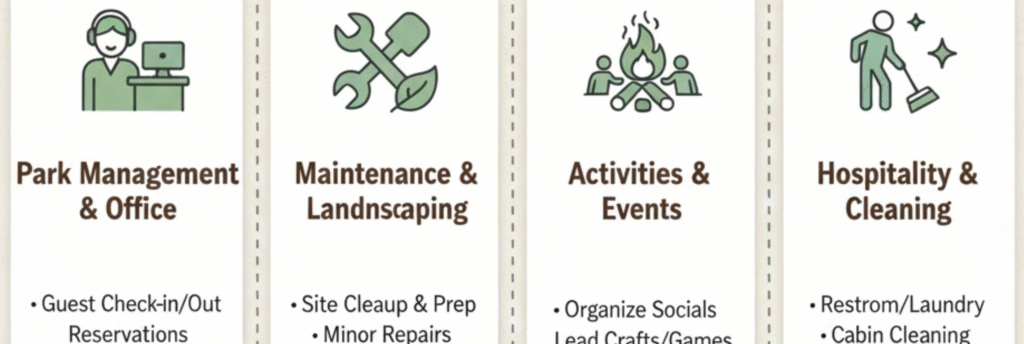
Work campers fill a variety of roles to keep campgrounds and RV parks running smoothly. At Inez Spring Riverfront RV Park (and similar parks), you’ll find workampers contributing in many departments. Here’s a breakdown of common work camping roles, and what each typically involves:
Maintenance & Groundskeeping
Many work campers are hired for maintenance and groundskeeping tasks. These behind-the-scenes heroes keep the park looking great and functioning well. Duties often include mowing lawns, weed trimming, raking leaves, trail maintenance, painting facilities, and basic repairs. Groundskeepers might also handle pool maintenance if the park has a swimming pool. Essentially, if it involves tools or landscaping, the maintenance crew is on it.
Work camper insight: Seasonal campgrounds frequently need extra hands to manage the wear and tear of a busy season. Grounds maintenance and repair work are top needs at parks, making this one of the most frequently advertised roles. If you have a knack for DIY projects or gardening, this could be your time to shine!
Guest Services & Office Duties
Another key area is guest services, which often takes place in the campground office or registration desk. Work campers in guest service roles handle check-ins and check-outs, make reservations, answer phone calls, and greet visitors with a smile. They may act as front-desk clerks or campground hosts (more on camp hosting below), providing information about park rules, amenities, and local attractions. Office duties can also include managing the camp store, processing payments, and using reservation software.
Housekeeping & Facilities Cleaning
Housekeeping is another common work camping role, critical for keeping the park sanitary and pleasant. Tasks include cleaning restrooms and shower houses, stocking supplies (toilet paper, soap), emptying trash bins, and sometimes cleaning rental cabins or communal areas. Workampers might start the day by ensuring all facilities are sparkling clean for guests.
Clean facilities are a top priority at any park (nothing ruins a camping trip like a dirty bathroom!). That’s why many parks, including Inez Spring, rely on diligent work campers to maintain 5-star cleanliness. Some housekeeping roles are paired with other duties – for instance, a couple might split tasks where one handles housekeeping while the other does groundskeeping.
Recreation & Activity Coordination
Larger parks or those with lots of amenities may have roles for activities coordinators or recreation staff. These workampers help plan and run fun events: think guided nature walks, craft sessions, movie nights, potlucks, or kids’ games. They might also act as a guide for local adventures (pointing guests to the best hiking trails or historic sites in Eastland.
Camp Host
Last but certainly not least is the Camp Host role – a quintessential work camper position. Camp hosts live on-site (in their RV) and serve as the “eyes and ears” of the campground. They greet incoming campers, escort them to their sites, explain park rules, and are available to answer questions. Hosts often perform nightly rounds to ensure quiet hours are observed and help late arrivals find their spot. They might also handle after-hours emergencies or alert security if needed.
Security Tasks
Security-related duties can go hand-in-hand with camp hosting. This could involve monitoring the entrance gate, checking that only registered guests enter, or simply being a friendly presence that deters mischief. Workampers with prior law enforcement or security experience often gravitate to these roles. However, any responsible RVer who is attentive and enjoys helping others can make a great camp host.
Note: Often, parks will combine multiple duties into one work camping position for variety. For instance, a “Relief Manager” workamper might do a bit of office work, a bit of maintenance, and serve as backup camp host on the manager’s days off. The key is flexibility – being willing to wear different hats as needed. In all cases, work campers play a vital role in guest satisfaction, whether they’re fixing a leaking faucet or recommending a great local diner.
Hiring Season Timeline and Expectations

When should you look for a work camping job, and how long do they last? Work camping positions follow the rhythms of the camping season, which can vary by region. In Texas (and much of the U.S.), the prime season is spring through fall. Here’s a breakdown of typical timelines and what to expect:
Spring Start – April/May
The majority of summer workamping jobs start in April or May and run through the late summer or early fall. RV parks like Inez Spring Riverfront RV Park typically begin welcoming work campers in mid-spring, as they gear up for the busy summer vacation months. If you’re aiming for a summer gig, start your job search early in the year (many employers begin recruiting in the winter for April/May starts.
Peak Summer – June through August
During these months, work campers are in full swing at campgrounds. You can expect campgrounds to be at their busiest, especially on weekends and holidays. Workampers should be prepared for a full workload in the peak season, whether it’s checking in dozens of arrivals on a Friday, cleaning up a flurry of sites on a Sunday morning, or running back-to-back activities for families. The Texas heat is also a factor – outdoor tasks might be scheduled for cooler morning or evening hours when possible. Hydration and sun protection are a must for summer work in Eastland, TX!
Season End – September/October
Come fall, many seasonal parks start winding down. In Texas, some parks might extend work camping roles into October if the weather remains pleasant and guests are still coming (for instance, summer positions might officially run April through October). During the last few weeks, work campers often help with season-end tasks like storing equipment, winterizing facilities, and saying goodbye to departing long-term guests. It can be a bittersweet time as the team wraps up a successful season.
Off-Season & Year-Round Roles
Not all work camping jobs are strictly summer-only. Year-round parks or those in warmer climates sometimes offer extended or even year-round workamping roles. Inez Spring Riverfront RV Park, for instance, has occasional year-round work camping opportunities for key positions because Texas weather allows for camping nearly year-round. Off-season (winter) duties might be lighter – focusing on maintenance projects, preparing for spring, or hosting the occasional winter camper. Parks that open year-round often rotate a smaller staff in winter, then ramp up again in spring. Some work campers will rotate to a different region, while others might return to the same park each season.
Expectations and work schedules
Most work camping positions come with an expected number of hours per week. A common arrangement is ~20 hours per week per person in exchange for a campsite. If a couple is workamping together, that might be structured as 20 hours each, or sometimes 15 each, depending on compensation. Some parks offer hourly wages for hours worked beyond the “site trade”. Other parks simply pay for all hours and provide the site free as a benefit.
Pro tip: If you’re targeting a summer workamping job in Texas or elsewhere, start applying and inquiring well ahead of time. Many experienced work campers line up their summer gigs by late winter. Likewise, if you’re a park owner (like Inez Spring) seeking summer staff, advertise early – Workamper News suggests beginning recruiting efforts by October or November for roles starting in April/May. Planning ahead ensures a good match on both sides.
Compensation and Perks for Work Campers

One of the most common questions about work camping is: How do work campers get paid, and what perks do they receive? The compensation model can vary from one park to another, but it typically includes a combination of free camping and possibly wages. Here’s what to expect:
Free Campsite (FHU Hookups)
Virtually all work camping positions include a free campsite for your RV as the baseline compensation. This means you get a Full Hook-Up (FHU) site – water, electricity, and sewer – at no charge for the duration of your commitment. Having your campsite covered can save you a significant amount of money. Many workampers consider the free site as part of their “pay.” In fact, lower living costs – such as reduced or eliminated campground fees – are a major benefit of workamping.
Utilities and Amenities
Along with the site, parks may include utilities like electricity (sometimes metered if usage is high), Wi-Fi, and access to park amenities at no charge. For example, work campers at Inez Spring can enjoy free use of laundry facilities, Wi-Fi, and even discounts at the camp store. Some parks throw in perks like free propane refills or free use of recreational gear (boats, golf carts, etc., if available).
Hourly Wages or Stipend
Many work camping jobs are paid positions in addition to the site. It’s common to see an hourly wage for all hours worked, or for hours worked over a certain threshold. For instance, a job might advertise “Free site plus $10/hour for 20 hours per week per person.” Other arrangements are “site plus small stipend”, especially for volunteer-heavy roles like camp hosting at public parks. According to Workamper News, while some campground jobs are volunteer, many do offer hourly pay and even bonuses for completing the full season. Always clarify the pay structure.
Season Completion Bonus
In some cases, instead of direct pay, the agreement is that X number of hours of work per week “pays for” the site. For example, 15 hours of work covers your site fee; any hours beyond that might be paid or optional. This is effectively a barter system. Most work campers opt to trade a set number of hours for their RV site because it lets them live in great locations inexpensively. Ensure you know if there’s a minimum hour requirement to cover the site.
Hourly Wages or Stipend
To encourage work campers to stay the entire season, some employers offer a bonus at the end. This might be a lump sum (say $250 or a week’s pay) or a special reward like a free week of camping in the future or a gift card. It’s a nice incentive and acknowledges that sticking through the hot Texas summer till the end of the season is appreciated! As noted earlier, “Some [campgrounds] even offer a bonus for completing the season.”
Other Perks
Depending on the park, other benefits could include free or discounted meals (if there’s a cafe or on-site restaurant), discounts on propane or store merchandise, free laundry, or even use of park facilities like boats, kayaks, pool, etc. For instance, at Inez Spring Riverfront RV Park, workampers get free tube rentals for the river and can join guest adventure excursions on their days off. If the park is part of a larger network (like KOA or Sun Communities), there might be discounts at other parks within the chain.
Couples vs. Singles Consideration
As mentioned, couples often split duties and hours. If you are a solo workamper, be aware some parks might expect a few more hours from a single person to cover the site value, since they can’t split the workload. This isn’t always the case, but it does happen. It’s partly to account for the fact that they’re giving one site whether it’s one person or two. Don’t let that discourage you – plenty of places happily hire singles without extra strings attached. Just know to discuss it upfront.
In summary, the compensation model for work camping typically ensures you have no camping costs and can even earn extra income. Imagine living at a beautiful riverfront park in Texas all summer, not paying a dime for your campsite or utilities, and getting a paycheck or stipend on top of it – that’s the workamper life. It’s a fantastic way to save money while enjoying a new locale.
Work Camping at Inez Spring Riverfront RV Park

At Inez Spring, we welcome work campers who enjoy being part of a relaxed, rural RV community with a strong sense of pride and hospitality. Each season, we bring on several work campers to help us keep the park in top shape — and in return, they receive a full-hookup RV site with access to all of our riverfront amenities, including our spring-fed pool, trails, and shaded community areas.
Roles
Work campers typically fill seasonal roles in light maintenance, groundskeeping, housekeeping, and guest services. These tasks include things like tidying up common areas, assisting with pool upkeep, small handyman-style repairs, and checking guest wristbands during the summer months. Others help with check-ins, guest questions, or light landscaping around the park. During the busy months, we especially appreciate work campers who can be a friendly, helpful presence for incoming guests — and it’s not uncommon to have a couple living near the entrance serving as unofficial camp hosts.
Compensation
This is not a paid position — instead, we fully cover your site fee in exchange for approximately 16 hours for back in sites and 20 hours for pull through sites of work per week. Electric usage is not included, but water and sewer are.
We generally hire for the main season (April to September), and we start posting openings as early as January so we can have our team lined up by March. We usually bring in 4 to 6 work campers each year, a mix of individuals and couples.
How to Find Work Camping Opportunities
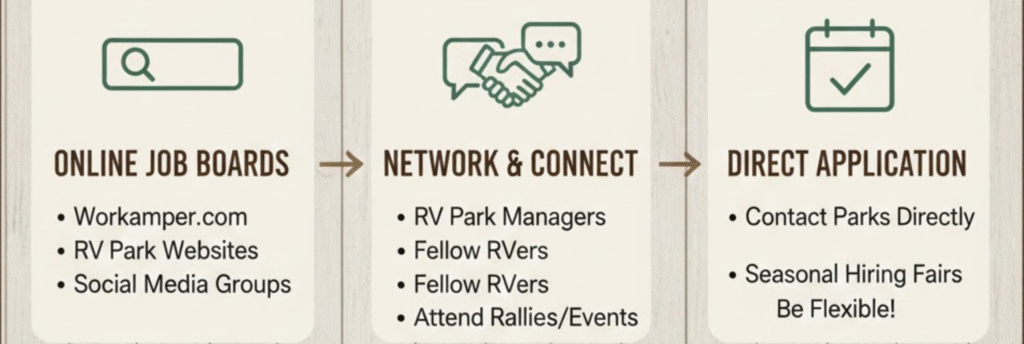
Whether you’re looking to work camp at Inez Spring Riverfront RV Park or elsewhere, it helps to know where the jobs are posted and how to connect with the work camping community. Below we compile some of the top resources, job boards, and forums for finding work camping and RV park jobs. These will be useful for job-seeking work campers and also for RV park owners seeking to advertise openings.
Top Resources and Job Boards for Workampers
1. Workamper News (Workamper.com)
The oldest and one of the most popular platforms, Workamper News has been around since 1987. They have a magazine, online job listings, and a resume service. Employers post jobs for a fee, and members (job seekers) get access to listings. Workamper News covers the whole USA and all kinds of workamping gigs. According to their site, you’ll find “various job postings and information relevant to your interests” and can discover opportunities for free campsites and paid work. If you’re serious, a membership is worth it, but they also have a free daily Hotline email with new job postings.
2. WorkampingJobs.com
- A free website where anyone can view listings and employers can post jobs for free. It’s very straightforward – think of it as classified ads specifically for “Work camping help wanted.” You can search by state or keyword. The site’s motto: “Work and camp. The best place to find help wanted ads from RV parks or campgrounds. 100% free for everyone.” It doesn’t require login to browse, which is nice. This is a great site to scan regularly for new listings.
3. Kamper Jobs (KamperJobs.com)
- Another free job board dedicated to RVers. It’s modern and easy to filter, with categories for singles, couples, by state, season, etc. (For example, you can click a category for “Singles / Solo Travelers” or “Couples / Duos” to find jobs friendly to each.) Kamper Jobs often has hundreds of listings nationwide, and they clearly label whether a job is “RV site + pay” or “volunteer” etc. As their tagline states, they list “Hundreds of work camping jobs. 100% FREE! Live the RV lifestyle and find your next adventure.”
4. CoolWorks (coolworks.com)
- This site isn’t exclusively for RVers, but it hosts seasonal job listings at resorts, national parks, camps, etc., many of which do offer RV spots or housing. They have a category for Jobs with RV sites or “Jobs with Housing.” For example, you might find a listing for a campground in Colorado seeking a work camper couple, or a job at a summer camp needing a cook (RV spot provided). CoolWorks is well-known among seasonal workers and worth checking out for variety.
5. KOA Work Kamper Program (workatkoa.com)
- Kampgrounds of America (KOA) has its own work camper program. If you join (KOA requires a small fee for a background check and membership), you get access to KOA campground job listings across the country. KOA campgrounds often hire couples for camp hosting, maintenance, and office roles. They even have a Work Kamper coordinator to help match you with parks. If you’ve dreamed of donning the yellow KOA shirt, this is your route. KOA’s site emphasizes combining work and camping with easy access to openings
6. Escapees RV Club Job Board
- Escapees (and its offshoot Xscapers) is a large RV club/community. They sometimes have a jobs board or forum where members post work camping or caretaker opportunities. Even if there’s not a formal board, being part of Escapees network can lead you to word-of-mouth gigs. (Escapees headquarters in Livingston, TX, by the way, often uses volunteer work campers for their events and campground!)
7. HappyVagabonds.com
- This site has a section for campground job listings (often smaller mom-and-pop places post here). It’s a bit old-school in design, but scroll through and you’ll see opportunities listed by state. Many postings include contact info for the park owners. It’s free to use.
8. Industry-Specific and Regional Sites
There are a few other niche sites and company career pages:
Sun Communities & Thousand Trails
These large campground companies have their own career portals. Sun Communities (which runs multiple RV resorts) lists jobs at various resorts (look for “Work Camper” positions). Thousand Trails/Encore sometimes hires seasonal work campers for their network of preserves.
State Parks & Public Lands
State parks (like Texas Parks) and agencies like the U.S. Army Corps of Engineers list volunteer campground host positions on their websites. For Texas State Parks, check the TPWD website for a volunteer/host page. Federal sites like Volunteer.gov aggregate volunteer gigs (which often include a campsite).
Workers on Wheels
A site (work-for-rvers-and-campers.com) with a mix of job listings and articles. They have a free newsletter and job ads. It’s run by a long-time RVing couple. You can even submit a “Situations Wanted” ad.
Not a traditional job board, but many leads appear there first.
Work Camping Forums and Communities
Beyond job boards, networking with other RVers can open doors to opportunities and advice. Here are some forums and communities to tap into:
RV Forums
Websites like iRV2, Escapees discussion forum, and Reddit (r/Workamping or r/FullTiming) have threads where people discuss work camping. The iRV2 Workamping forum, for instance, might have people doing “roll call” for who’s working where this season, or sharing an opening their boss asked them to publicize.
Escapees/Xscapers
As mentioned, Escapees RV Club has a job exchange board for members. They also hold an annual event called Escapade and other convergences where networking can happen. Their magazine often has stories from workampers.
Workamper News Community
If you join Workamper News, they have forums and a social network called Workamper Concierge or something similar, where you can interact with other workampers and find advice on resumes, interviews, etc.
Volunteering
If you’re interested in volunteering (like state park hosting), there are communities specifically for that too. For example, the Facebook group “Volunteer Campground Hosts” connects people who host at state and federal parks, sharing when openings are available and tips for applying through government channels.
Networks
Networking can sometimes land you a job before it’s even advertised. It’s not uncommon for an RV park owner to post in a Facebook group “Looking for a couple to help at our campground in Texas, May-September, PM me for details,” and bam – position filled via word-of-mouth. So, stay connected!
A quick case-in-point: On RV forums, workampers often note that small parks (which might not use formal job boards) find their workers through community connections. Perhaps one workamper recommends a friend to the park owner, or someone they met last season. By engaging with the community, you increase your chances of hearing, “Hey, I know so-and-so in Texas needs a camp host next month, are you free?”
Frequently Asked Questions
What do work campers do at RV parks?
Work campers take on a variety of jobs to help campgrounds run smoothly. Common duties include grounds maintenance, facility cleaning, office work, guest services, and camp hosting.
How much do work camping jobs pay?
It depends on the campground and position. Most work camping jobs compensate you at least with a free RV site (including hookups) in exchange for a set number of working hours. Many also pay an hourly wage for hours worked beyond the site compensation. Always clarify the arrangement.
Can single RVers get work camping jobs, or do parks only hire couples?
Yes, singles absolutely can get work camping jobs. While it’s true that many parks like hiring couples (since they get two workers for one site), there are plenty of opportunities for solo workampers. In fact, some parks prefer singles for certain roles or if they only have a small site available.
When do campgrounds hire work campers for the summer season?
Hiring for summer usually happens well before summer starts – often in late fall or winter. For a season that begins in April or May, many campgrounds start recruiting work campers around October through February.
How can I apply for a work camping job at Inez Spring Riverfront RV Park?
If you’re interested in joining our team at Inez Spring, we’d love to hear from you! Send us an email at contact@inezspring.com with your workamping resume and a note about why you’d like to work with us.
Ready to Trade the Daily Grind for a Riverside Lifestyle?
After a day spent maintaining our beautiful grounds and welcoming new guests, there’s no better feeling than retiring to your own private spot along the river. At Inez Spring, we offer more than just a position—we offer a home base for your next adventure.
Explore our available RV sites and see where you could be living, then secure your role in our friendly community.