Published | Updated
If you have camped free in Arizona or Utah, Texas is a shock. You pull off the highway expecting open public land and find barbed wire, a ranch gate, and a sign that says no trespassing. Then another one.
Free camping in Texas is real, but it lives in a handful of specific places, and most of the lists online mix legal sites with parking lots that will get you a knock on the window at 2 AM. This guide sorts out what is actually legal, where it is, what the rules are, and what to do on the night free stops working.
Every rule for free camping in Texas below links to the agency or source that sets it. Every fee is a posted fee, checked October 2026.
Quick answer: Free camping in Texas is limited because about 95 percent of the state is private land and there is no open BLM land. Legal free options are most campgrounds at Lake Meredith National Recreation Area, dispersed sites in the national grasslands and East Texas national forests, and beach camping at Padre Island National Seashore with a free permit plus entrance fee. Stay limits are usually 14 days.
About 95 percent of Texas land is privately owned, according to Texas A&M's Natural Resources Institute. Texas kept control of its public lands when it joined the Union, so the Bureau of Land Management never ended up holding big tracts here the way it does in Nevada or New Mexico.
What is left is federal land managed by the Forest Service and the National Park Service. Texas Highways puts it at roughly 800,000 acres open to dispersed and primitive free camping. That sounds like a lot until you remember Texas is about 171 million acres. Most of it sits in East Texas piney woods and the Panhandle, which matters if you are crossing on I-20.
So the honest framing is this: free camping in Texas is a destination you plan for, not something you find by pulling off the road. Plan it, and it works well.
Here is every legal type of free camping in Texas we could verify, with the rules that apply and the rigs that fit. If a spot is not on a list like this one, assume it is private land.
| Place | Region | What you get | Key rules | Rig fit |
|---|---|---|---|---|
| Lake Meredith National Recreation Area | Panhandle, near Fritch | Several free first-come campgrounds on the lake | 14 days in 30, 60 days a year; only the Sanford-Yake RV sites charge | Most rigs at the developed campgrounds |
| LBJ National Grasslands, Forest Road 904 | North Texas, about 10 miles north of Decatur | A ridge loop with 4 or 5 dispersed sites | No fee, no reservations, 14 days per month | Two sites fit RVs, one fits a full-size rig |
| Rita Blanca National Grasslands | Far northwest Panhandle | Dispersed camping in signed Forest Service units | Camp only in units with the Forest Service sign | Self-contained rigs and tents |
| Sam Houston, Davy Crockett, Angelina, and Sabine national forests | East Texas | Dispersed sites and hunter camps | Generally free; rules change in hunting season | Tents and smaller rigs; forest roads get tight |
| Padre Island National Seashore | Gulf Coast, south of Corpus Christi | Beach camping on North Beach and South Beach | Free permit plus park entrance fee; 14 days, 28 days a year | 2WD on the packed first miles, 4WD farther down |
| Harvest Hosts and Boondockers Welcome | Statewide | One-night stays at farms, wineries, and private hosts | Paid membership; host rules apply | Self-contained rigs |
Sources: National Park Service, Lake Meredith camping; Boondockers Bible, Forest Road 904; Texas Highways; U.S. Forest Service, National Forests and Grasslands in Texas; NPPlan, Padre Island beach camping.
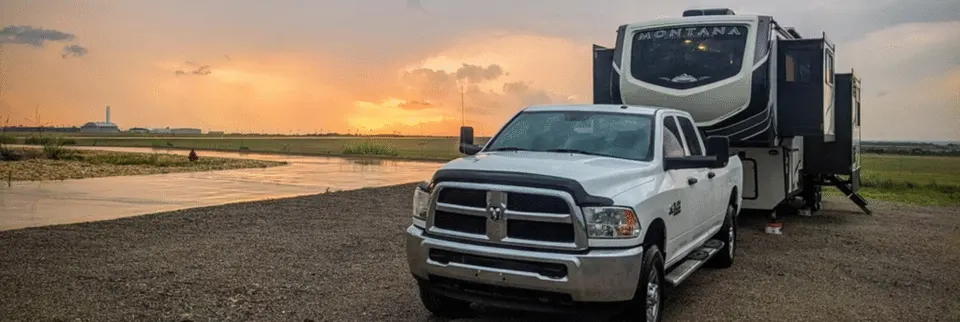
If you have a rig and time in the Panhandle, start here. The National Park Service says all sites and campgrounds at Lake Meredith are free on a first-come basis, except the 10 reservable RV sites at Sanford-Yake. You can stay 14 consecutive days in any 30-day period. It is the closest thing to the open, western feel of free camping in Texas.
For North Texas, LBJ near Decatur is the go-to. The open loop off Forest Road 904 has no fee and no reservations, with a 14-day monthly cap, per Boondockers Bible. It only has four or five sites, and just two fit an RV. Arrive early on Friday or go midweek.
For free camping in Texas under tall pines, this is the region. The Forest Service says dispersed camping in the National Forests and Grasslands in Texas is generally free. Rules vary by ranger district, and deer season changes where you can camp, so call ahead. Texas Highways found good spots at Big Woods Hunter Camp in Sam Houston and Neches Bluff in Davy Crockett, and it warns that the forest road network can loop you right back where you started.
This is the most scenic free camping in Texas, with one caveat: beach camping is free with a self-registration permit, but you still pay the park entrance fee. The camping limit is 14 days, then you leave for 14 days, with 28 days a year in total. The first stretch of South Beach is usually hard-packed, and the sand softens farther south, so most RVs stay near the front.
Tent campers have it a little easier, because you fit where rigs do not. The best free tent camping in Texas is in the national forests, the grasslands, the free Lake Meredith campgrounds, and on the Padre Island beach. Bring water. Almost none of these sites have a tap.
When you need something closer, the cheap tent backups are state park primitive sites. Palo Pinto Mountains lists hike-in primitive sites at 12 USD, Lake Mineral Wells at 10 USD, and Dinosaur Valley at 16 USD, all plus the daily entrance fee, per Texas Parks and Wildlife. Not free, but cheaper than a fast-food dinner for two. See our Dinosaur Valley State Park guide for fees, the park map and the best months to see the tracks.
The closest legal free camping to Dallas and Fort Worth is the LBJ National Grasslands near Decatur, about 40 miles northwest of Fort Worth (est.), where dispersed sites on Forest Road 904 cost nothing and the grassland-wide limit is 14 days in any 30. That is the one free option most DFW campers can reach after work on a Friday.
The LBJ Grasslands also have TADRA Point, a designated trailhead camping area with restrooms and parking, per the Boondockers Bible LBJ camping map. Northeast of Dallas, the Caddo National Grasslands near Honey Grove run Coffee Mill, a 13 site first-come campground on Coffee Mill Lake with no electric, where you pay on site through Recreation.gov, per the Coffee Mill listing. Cheap, but not free.
| Spot | Direction from DFW | Cost | Hookups | Best for |
|---|---|---|---|---|
| LBJ National Grasslands, Forest Road 904 | Northwest, near Decatur | Free | None | Self-contained rigs, a quiet Friday night |
| LBJ National Grasslands, TADRA Point | Northwest, near Decatur | See Forest Service posting | None, restrooms on site | Riders and hikers with a small rig or tent |
| Caddo National Grasslands, Coffee Mill | Northeast, near Honey Grove | Paid on site, first come | None | Tents and small trailers by the lake |
| Inez Spring Riverfront RV Park, I-20 Exit 343 | West, about 1 hour 35 from Fort Worth | RV sites from $40 a night | Full hookups | The reset night between free stops |
Read the posted rules at the forest road before you set up. The Forest Service changes where you can camp during hunting season, and the grasslands sit inside active hunting units each fall. If you are rolling west on I-20 toward Abilene instead, there is no free public land along the corridor between Fort Worth and Abilene, so plan a paid night. Our RV camping in Texas by region guide lists the cheapest options by stretch, and you can book a hookup night at Exit 343 in a couple of minutes.
You can sleep. You cannot camp. That distinction is what keeps free camping in Texas out of trouble.
The rule that works everywhere: no chairs, no grill, no awning, slides in if they block anything. If it looks like a campsite, it is one, and that is when the knock comes.
Most travelers do not treat free camping in Texas as all or nothing. They climb up and down a ladder depending on the night. Here is that ladder, with real posted fees for each rung.
| Rung | What it is | Posted nightly cost | What you give up | Example |
|---|---|---|---|---|
| 0. Free | Dispersed, grasslands, national recreation area, beach | 0 USD (Padre Island adds an entrance fee) | Water, power, dump, showers, often cell signal | Lake Meredith, LBJ Grasslands |
| 1. Almost free | Non-electric public sites | 8 to 12 USD | Power and sewer | Proctor Lake Promontory Park non-electric, 8 USD; Possum Kingdom water sites, 12 USD plus entry |
| 2. Cheap hookups | Corps of Engineers and state park electric sites | 15 to 30 USD | Usually sewer, sometimes 50 amp | Proctor Lake 30 amp, 16 USD; Abilene State Park, 12 to 24 USD plus entry |
| 3. Full hookup, private | Water, sewer, 30/50 amp, laundry, showers | About 40 USD and up | Nothing on the list above | Inez Spring, I-20 Exit 343, from 40 USD |
| 4. Monthly | Long-stay full hookup | 500 USD back-in or 650 USD pull-through a month at Inez Spring, plus metered electric | Flexibility | Workers, snowbirds, long projects |
Sources: U.S. Army Corps of Engineers, Proctor Lake camping; Texas Parks and Wildlife campsite pages for Possum Kingdom and Abilene State Park, checked October 2026. Some Proctor Lake loops close October 1 to March 31, so check before a winter trip.
Free camping in Texas is not zero-cost camping. A generator burns fuel. Full tanks need a dump station, and a fresh-water fill may cost a few dollars or a long detour. In a Texas August, running the AC off a generator all afternoon can cost more in gas than a hookup site would have.
That is why we suggest a rhythm instead of a rule: three nights free, one night on hookups. Use the hookup night to dump, fill, do laundry, charge everything, and sleep with the AC on. Our guide to RV dump stations on I-20 in Texas lists where to empty tanks between free nights.
Free camping in Texas barely exists along I-20 between Fort Worth and Abilene, but the corridor has some of the cheapest hookups in the state. If you are crossing North Texas, these are the low cost RV camping options worth knowing.
For a mile-by-mile look at every park on the interstate, see our I-20 RV parks corridor guide.
Most free camping in Texas has no camp host and often no cell signal. Tell someone your location and return date. Carry more water than you think, especially in summer, and know the nearest hospital before you lose bars.
Check for county burn bans before any fire; they change fast in dry Texas summers. Pack out every piece of trash. Respect hunting seasons in the national forests and wear orange on forest roads in the fall. Our Texas RV camping safety guide covers heat, storms, and wildlife, and the RV camping checklist for Texas lists the water, power, and repair gear that makes boondocking comfortable.
Here is the call no boondocker wants to make. It is day four of dry camping. The gray tank light is on, the fresh tank is near empty, it was 98 degrees at 4 PM, and the generator has been running since lunch. Someone in the rig has not showered since Tuesday, and they would like that noted.
That is not failure. That is the ladder doing its job. The mistake is pushing one more free night and paying for it in a ruined next day, a sour mood, or a dead battery 200 miles from a shop.
If you have ever stretched a trip one night too long to save 40 bucks, you already know what the next morning costs. Pick your hookup night on purpose, before the tanks pick it for you.
Picture pulling in at sunset after a week off-grid. You back in, hook up water, sewer, and power in ten minutes, and the AC is running before the leveling jacks are down. You start a load in the laundry, walk to a real shower, and sleep with the windows shut and the hum of the AC. Next morning, tanks empty and fresh tank full, you are back on I-20 with three more free nights in the bank.
That is the kind of night a full-hookup park is for. Here is what one night at Inez Spring gets you:
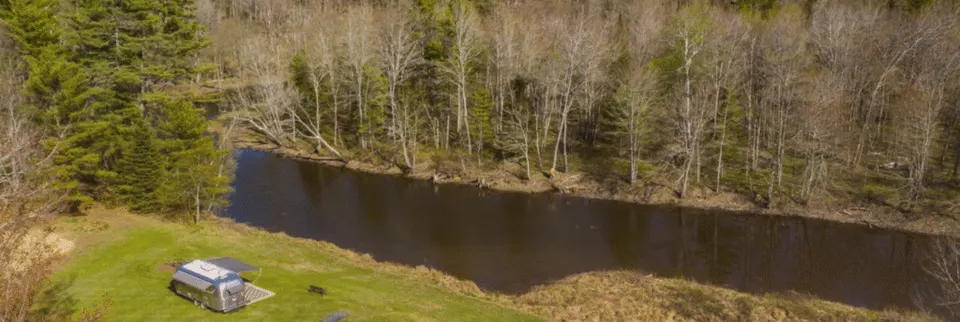
The Leon River runs through the park, with a private kayak launch and walking trails on 24 acres. Questions about a late arrival or a big rig go to the front desk at (254) 629-1197.
Guests rate us 4.8 stars on 222 Google reviews, as of October 2026. One wrote: "quiet nights, friendly community, convenient I-20 access." If you are planning a longer stay, our monthly RV sites start at 500 USD plus metered electric. Check open dates and book a hookup night.
Yes, but in fewer places than out West. Legal free camping in Texas includes most campgrounds at Lake Meredith National Recreation Area, dispersed sites in the national grasslands and East Texas national forests, and beach camping at Padre Island National Seashore with a free permit plus the park entrance fee. Each has stay limits, usually 14 days, and none has hookups.
Effectively no. Texas kept its public lands when it joined the Union, and about 95 percent of the state is privately owned, per Texas A&M's Natural Resources Institute. That is why free camping in Texas runs through national forests, national grasslands, a national recreation area, and a national seashore instead of the open BLM land RVers use in Arizona or Nevada.
The best free tent camping in Texas is in the four East Texas national forests (Sam Houston, Davy Crockett, Angelina, Sabine), the LBJ and Caddo national grasslands north of Dallas, the free campgrounds at Lake Meredith in the Panhandle, and the beach at Padre Island National Seashore. Tents also fit the cheap backups: hike-in state park sites run 10 to 16 USD a night plus entry.
You can rest, not camp. Good Sam reports that Texas allows parking at rest areas for up to 24 hours unless signs say otherwise, so read the posted sign at each stop. Keep it to sleeping in your rig: no chairs, grills, awnings, or slide-outs into walkways. On I-20, TxDOT runs rest areas in Eastland County at mile posts 353 and 359.
Generally yes. The U.S. Forest Service says dispersed camping in the National Forests and Grasslands in Texas is generally free and open to the public, while some developed areas charge a fee. Rules vary by district, and hunting season changes where you can camp, so call the local ranger district before you go and check posted closures at the forest road.
The closest legal free camping to Dallas and Fort Worth is the LBJ National Grasslands near Decatur, northwest of Fort Worth, with free dispersed sites on Forest Road 904 and a 14 day limit in any 30 days. There are no hookups. Coffee Mill in the Caddo National Grasslands northeast of Dallas is first come and paid on site.
Army Corps of Engineers lakes are usually the cheapest hookups. At Proctor Lake near Comanche, 30-amp sites run 16 USD and full 50-amp sites with sewer run 28 USD a night, per the Corps. State parks run about 15 to 35 USD plus a daily entrance fee. Private full-hookup parks start around 40 USD; Inez Spring at I-20 Exit 343 starts from 40 USD.
Texas rewards the RVer who plans. Free camping in Texas works best as part of a ladder: a few free nights on public land, a cheap hookup night to reset, and back out again. Plan the reset before the tanks plan it for you.