Published | Updated
It's 6 PM on a Friday. You've backed into the site, the kids are already asking about the river, and you turn on the spigot. The hose fitting sprays sideways because the washer is gone, and the regulator is sitting on the garage shelf at home.
That part costs pocket change, and it just cost you the first night of the weekend. A real RV camping checklist exists to stop that exact moment. Not a list of 200 random items, but a short system that puts the right gear in the right bin every time.
We run an RV park on the Leon River, and this is the list we would hand you at the front desk. One item near the top of Zone 1 is the cheapest thing on the page and protects the most expensive system in your rig. We'll get to it.
Quick answer: An RV camping checklist works best in five zones. Zone 1 is the hookup bay: regulator, hoses, power adapters, surge protector, blocks and chocks. Zone 2 is the kitchen. Zone 3 is camp comfort and heat gear for Texas sun. Zone 4 is safety: first aid, extinguisher, detectors, weather radio and tools. Zone 5 is water and fun: life jackets, water shoes and fishing gear. Then run a three-step departure check.
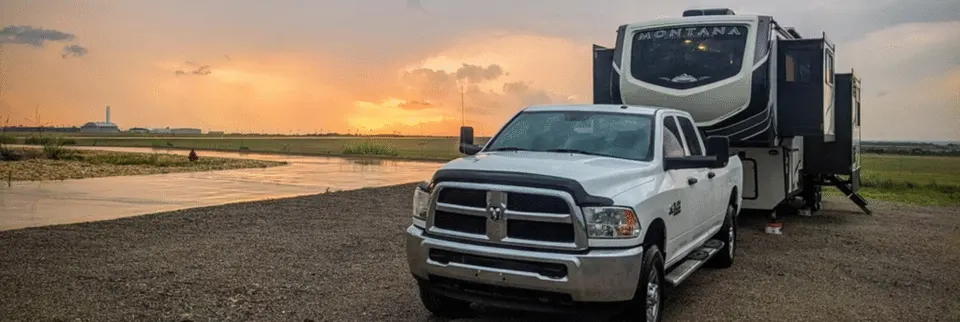
If you've ever packed for a dry site, you already know the hard part of RV camping isn't the gear. It's remembering where the gear went. Most packing lists are written by category, which is fine for shopping and useless at 6 PM in a campsite.
The Five-Zone method sorts your RV camping checklist by where you'll use each thing. Each zone gets one bin or one cabinet, and the bin stays packed between trips. You only restock what you used.
| Zone | Where it lives | What it covers | When you need it |
|---|---|---|---|
| 1. Hookup bay | Outside storage bay | Water, sewer, power, leveling | First 15 minutes at the site |
| 2. Kitchen | Galley cabinets and a cooler | Cooking, cleanup, food storage | First meal |
| 3. Camp comfort | Second bay or truck bed | Chairs, shade, fans, lights, rug | First evening |
| 4. Safety | Inside the rig, by the door | First aid, fire, detectors, tools, weather | Any time, fast |
| 5. Water and fun | A tote or duffel | Life jackets, water shoes, fishing | First afternoon |
The rule is simple: if an item doesn't have a zone, it doesn't come. That one habit cuts most of the clutter from a Texas RV packing list.
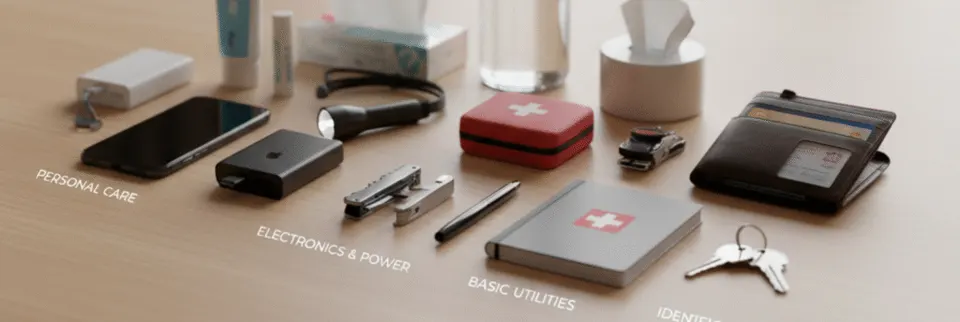
Here's the item we promised. The water pressure regulator. Campground water pressure changes from park to park and even day to day, and a hard surge can split a fitting or stress the water heater. A regulator screws onto the spigot before your hose, takes ten seconds, and protects plumbing that costs far more to fix.
The rest of Zone 1 on the RV camping checklist is the kit that gets you hooked up in 15 minutes instead of 45. These are the RV essentials that never leave the bay.
| Item | Why it matters | Texas note |
|---|---|---|
| Water pressure regulator | Protects RV plumbing from high pressure | Pressure varies widely between parks |
| Drinking water hose, 25 to 50 feet | Food-safe hose for fresh water | Summer sun makes cheap hoses taste like plastic |
| Inline water filter | Cuts sediment and taste | Useful where parks run on well water |
| Sewer hose kit with elbow | Clean, sealed dump at the site | Carry a spare elbow; they crack in the heat |
| Disposable gloves | Basic hygiene at the sewer connection | Pack a full box |
| 30 to 50 amp and 50 to 30 amp adapters | Lets you use any pedestal | Summer AC loads make the right amp service matter |
| Surge protector | Guards against bad pedestals and spikes | Storm season brings power blips |
| Leveling blocks and wheel chocks | Level fridge, stable rig | Ranch-country sites are rarely perfectly flat |
| Spare hose washers and thread tape | Stops the sideways spray | Washers dry out in heat |
| Tire pressure gauge | Check tires cold before you roll | Heat and low pressure are a bad mix |
Your Zone 1 bin hooks up to water, sewer and 30 or 50 amp power at your site. Label the bin, keep it in the same bay every trip, and never borrow from it for the house.
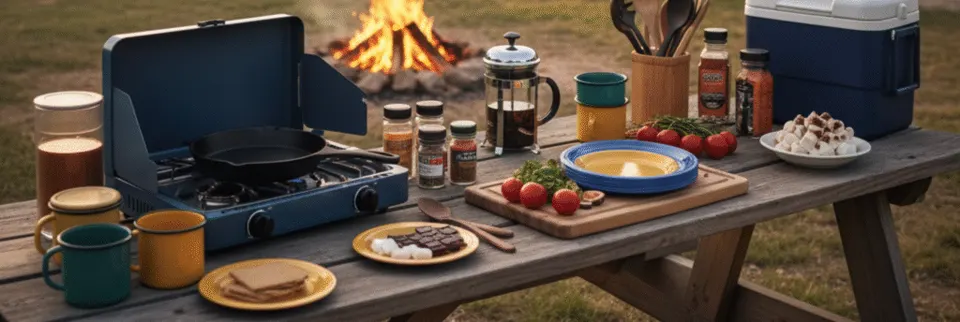
Cook simple on the first night. Pre-made tacos or burgers beat a three-pan dinner when you're still leveling the rig.
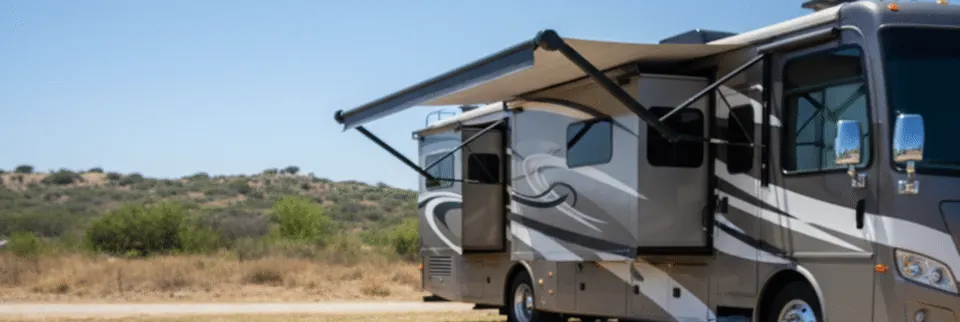
From June to September, the Texas sun decides your schedule. Pack Zone 3 for shade first and comfort second.
Plan on at least one extra gallon of drinking water per person per day in summer, more if you're hiking. If pets stay inside while you're out, add a remote temperature monitor. Our guide to pet-friendly RV parks on I-20 covers the rest of the pet kit.
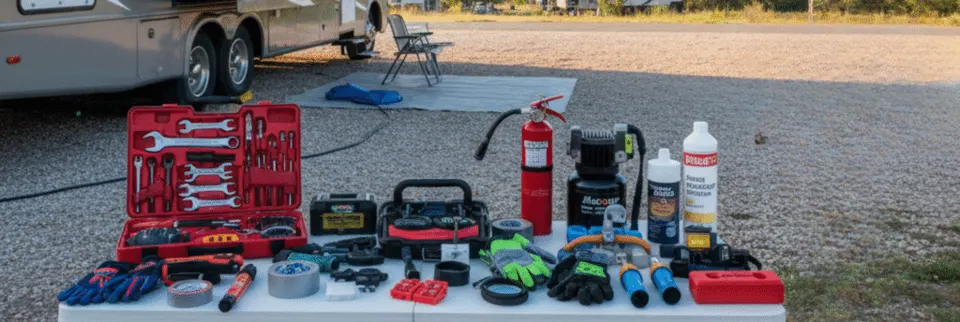
Zone 4 is the bin you hope to ignore all weekend. Keep it inside the rig, near the door, where anyone can grab it.
Leave the old snakebite suction kit at home. Current first aid guidance says not to suck out venom, and our RV camping safety guide for heat, storms and river days explains what to do instead.
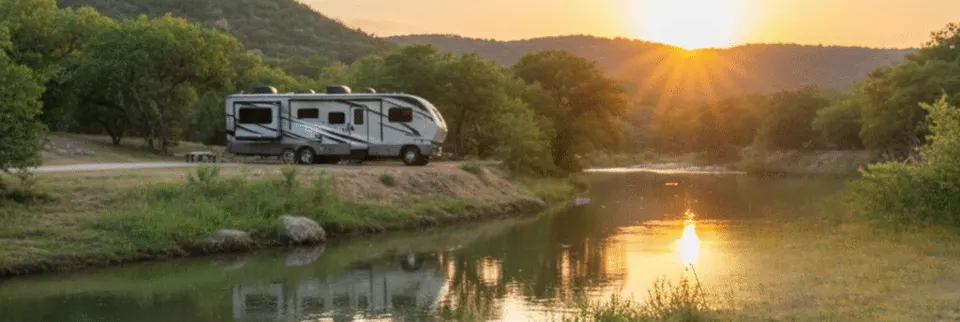
Texas camping in warm months usually means water. Zone 5 is one tote that walks from the rig to the river without anyone hunting for a sandal.
Texas requires children under 13 to wear a Coast Guard approved life jacket on recreational boats under 26 feet while underway (Texas Parks and Wildlife life jacket rules). We treat a kayak the same way.
At Inez Spring, your Zone 5 bag walks to the private river launch on the Leon River, and Lake Leon is about 10 minutes away. We don't rent kayaks, so bring your own. For where the fish are, see our Lake Leon fishing guide.
Even a perfect RV camping checklist needs a last look. The 48-2-2 check splits it into three short moments, so nothing depends on memory at the curb.
If you only keep one RV camping checklist in the rig, keep this one. It's the version that catches the mistakes the packing list can't.
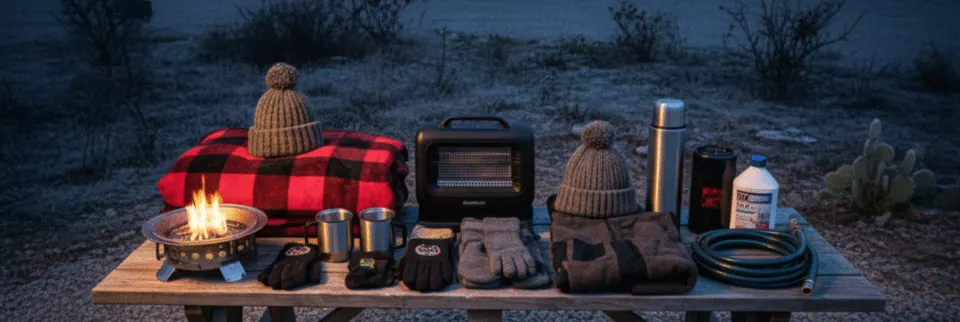
Texas winters are mostly mild, then a front drops the temperature fast, and a summer RV camping checklist misses what a cold night needs. For a weekend trip between November and March, add five things to your camp Texas packing list:
Staying longer than a weekend in winter? That needs a different list. Our Texas winter weather and winter RV packing list covers freezes, skirting and month-long stays.
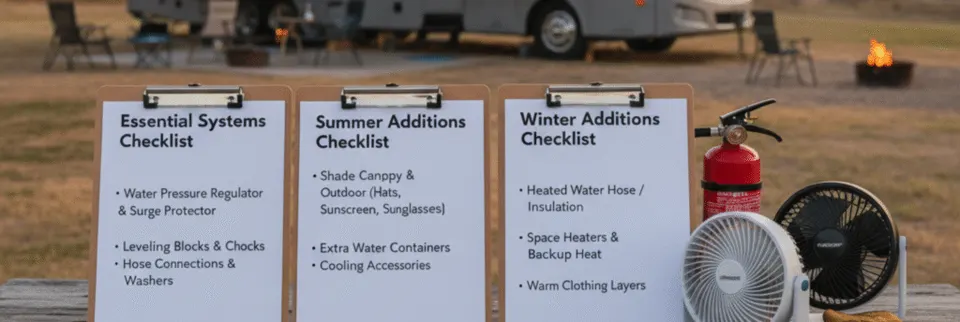
This is the print-ready version: 25 items in one table, with an empty box to tick and the zone each item lives in. To print it, use your browser's Print command (Ctrl+P on a computer, Share then Print on a phone) and print only this page section, or save it as a PDF. Tape it inside a cabinet door and check it before every trip.
| Packed | Item | Zone |
|---|---|---|
| ☐ | 1. Water pressure regulator | Zone 1: hookup bay |
| ☐ | 2. Drinking water hose | Zone 1: hookup bay |
| ☐ | 3. Inline water filter | Zone 1: hookup bay |
| ☐ | 4. Sewer hose, elbow and gloves | Zone 1: hookup bay |
| ☐ | 5. 30 and 50 amp adapters | Zone 1: hookup bay |
| ☐ | 6. Surge protector | Zone 1: hookup bay |
| ☐ | 7. Leveling blocks | Zone 1: hookup bay |
| ☐ | 8. Wheel chocks | Zone 1: hookup bay |
| ☐ | 9. Spare hose washers | Zone 1: hookup bay |
| ☐ | 10. Tire pressure gauge | Zone 1: hookup bay |
| ☐ | 11. Skillet, pot and utensils | Zone 2: kitchen |
| ☐ | 12. Cooler | Zone 2: kitchen |
| ☐ | 13. Trash bags and paper towels | Zone 2: kitchen |
| ☐ | 14. Camp chairs | Zone 3: comfort and heat |
| ☐ | 15. Shade canopy or awning screen | Zone 3: comfort and heat |
| ☐ | 16. Fans and lanterns | Zone 3: comfort and heat |
| ☐ | 17. Sunscreen and hats | Zone 3: comfort and heat |
| ☐ | 18. Extra drinking water | Zone 3: comfort and heat |
| ☐ | 19. First aid kit | Zone 4: safety |
| ☐ | 20. Fire extinguisher | Zone 4: safety |
| ☐ | 21. Weather radio and power bank | Zone 4: safety |
| ☐ | 22. Basic tool kit and spare fuses | Zone 4: safety |
| ☐ | 23. Life jackets that fit | Zone 5: water and fun |
| ☐ | 24. Water shoes and towels | Zone 5: water and fun |
| ☐ | 25. Fishing gear and license | Zone 5: water and fun |
Tape a second copy of this RV camping checklist inside the hookup bay door. It's the first thing you'll see when you open the bay at the site.
Texas state parks are some of the best camping in the state, and their sites book up early on holiday weekends. They also change what goes on your RV packing list, because many state park RV sites are water and electric only, with a shared dump station.
| What changes | Water and electric site | Full-hookup site |
|---|---|---|
| Sewer | Tanks fill; plan a dump station run or a portable tank | Sewer at the site, dump as you go |
| Showers | Short showers to save tank space | Normal showers |
| Hoses and cords | Longer hose and cord, pedestals can sit far away | Standard lengths usually work |
| Extra gear | Portable waste tank, more gloves, tank treatment | Standard Zone 1 kit |
| Planning | Track tank levels every day | No tank math |
Check the site type when you book through the Texas State Parks reservation system. For more places to camp across the state, including lower-cost options, see our free and cheap RV camping guide, and for trip planning start with our guide to RV camping in Texas, from the Hill Country to the I-20 corridor.
Look back at everything above. A big piece of any RV camping checklist isn't gear at all. It's the tank math, the generator fuel, the hunt for ice and the 9 PM parts run.
A full-hookup site deletes most of that. Water, sewer and steady power are at the pedestal, so Zone 1 becomes a 15-minute job and the AC runs through a July afternoon without anyone watching a fuel gauge. That is the case for booking one.
Picture the Friday from the top of this page, run the other way. The Zone 1 bin comes out, the regulator goes on first, and you're hooked up before the kids finish asking about the river. By the time the sun goes down, the chairs are out, the river is nearby, and the only thing left on the list is dinner.
There is one more thing that never fits on a packing list: how a park feels at night. One reviewer put it as "quiet nights, friendly community, convenient I-20 access." Guests rate us 4.8 stars across 222 Google reviews (October 2026).
Summer weekends near holidays fill first, so if your dates are fixed, lock the site before you start packing. Check open dates and book your full-hookup site from 40 USD a night.
A good RV camping checklist covers five zones. The hookup bay holds the water pressure regulator, drinking water hose, sewer hose kit, power adapters, surge protector, leveling blocks and chocks. The kitchen and camp comfort zones cover cookware, a cooler, trash bags, chairs, shade, fans and lights. Safety means a first aid kit, fire extinguisher, tested detectors and a weather radio, while the water zone holds life jackets, water shoes and fishing gear.
Yes. Water pressure at campground spigots varies from park to park, and a sudden high-pressure line can damage RV plumbing, fittings and the water heater. A regulator screws onto the spigot before your hose and keeps the flow at a level your rig can handle, and your owner's manual lists the maximum pressure for your plumbing. It is cheap, takes ten seconds to install, and belongs first in Zone 1 of your RV camping checklist.
The small connectors cause the most trouble when they are missing: the water pressure regulator, the 30 to 50 amp adapter, the sewer hose elbow, spare hose washers and leveling blocks. None of them is expensive, but each one can stop a hookup cold. Keep them in one labeled bin that lives in the rig, so they never leave with the house gear, and check that bin against your RV camping checklist before every trip.
Plan for heat first. Pack a pop-up canopy or awning shade, battery fans, cooling towels, wide-brim hats, sunscreen and at least one extra gallon of drinking water per person per day. Add a remote temperature monitor if pets stay in the rig, and reflective covers for windshield and windows.
Many Texas state park RV sites are water and electric only, with a shared dump station, so pack for tank management: a long sewer hose, gloves, a portable waste tank if your stay is long, and water-saving habits. Bring a longer drinking water hose and an extension-rated power cord, since pedestals can sit far from the pad. Check the site type when you book through the Texas State Parks reservation system.
Inez Spring Riverfront RV Park is at Exit 343 on I-20 in Eastland, about 1 hour 35 minutes west of Fort Worth, about 2 hours west of Dallas and about 50 minutes east of Abilene. It has more than 70 full-hookup sites with water, sewer and 30 or 50 amp power, a private kayak launch on the Leon River and laundry. RV sites start from 40 USD a night.
Pack by zone, run the 48-2-2 check, and let the hookups do the rest. A good RV camping checklist turns a Friday night scramble into ten minutes at the pedestal and a long evening in a camp chair.
Related: Stay at Inez Spring | Things to do near Eastland